Project
Goals, tasks, decisions, risks, milestones, notes, sources, and evidence.

 .memory
.memory is a portable, SQLite-backed format for context that needs to survive beyond one chat. That needs to store multiple types of media and information. Stored timeline
Local preview. Not security-certified.Long-lived work outgrows scattered notes, JSON exports, and sidecar files. A .memory file keeps a coherent body of context in one local container, with sensitive payloads encrypted using local key material.
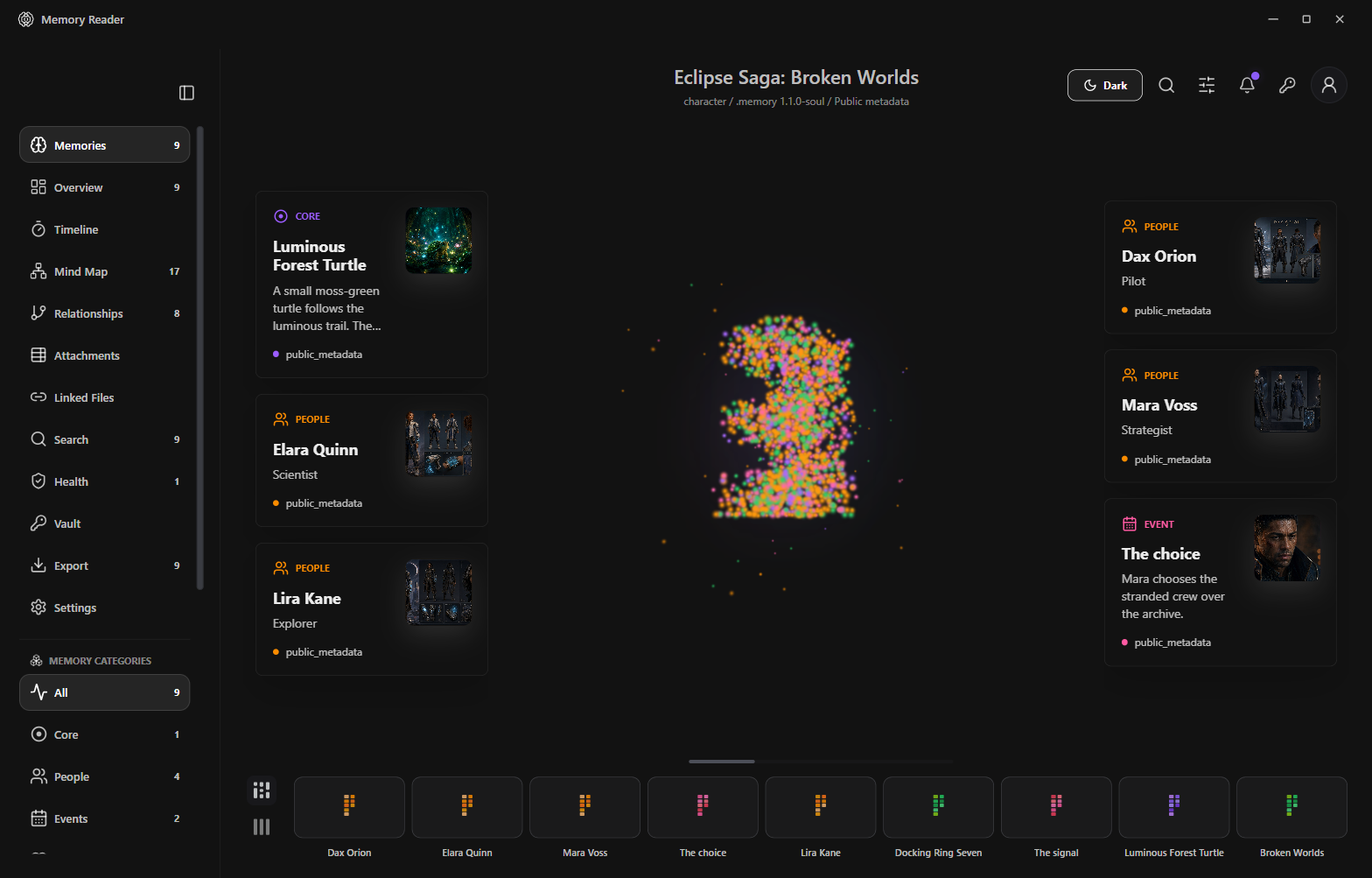
The Memory Reader projects a .memory file into browsable memories, timelines, graphs, relationships, attachments, linked files, search, health, and vault views.
Project, character, agent, story world, or collection
Typed objects, relationships, provenance, and timeline
Encrypted attachments, references, and version history
Audit, lifecycle, retention, and maintenance metadata
A .memory file organizes text, images, video, voice clips, references, timelines, relationships, preferences, and history inside one portable container. Use it to capture a complete character, a shareable orchestrator, or the preferences that make Kwib feel like yours—without scattering the context across folders and apps.
Each profile gives its domain a clear vocabulary while retaining the same portable container, integrity model, and local-first workflow.
Goals, tasks, decisions, risks, milestones, notes, sources, and evidence.
Identity, voice, backstory, relationships, beliefs, arcs, timeline, and canon.
Persona, goals, boundaries, tools, permissions, reflections, lessons, and rules.
Locations, scenes, events, continuity, contradictions, branches, and relationship maps.
Links between complete Memory files without merging them into one giant container.
A .memory file carries the creative system behind the output, not just the last prompt. Keep canon, media, decisions, and change together as the work grows.
Carry identity, backstory, voice clips, relationships, beliefs, contradictions, and character arcs. Record how they grow, change, and evolve over time.
Keep scenes, locations, timelines, canon decisions, story images, video, voice performances, and source material connected to the world they belong to.
Package its persona, goals, tools, permissions, workflows, lessons, and operating rules in a portable file that can move between people and trusted local apps.